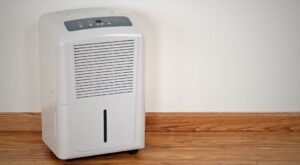
A dehumidifier rated for your whole basement can still run nonstop and barely move the reading. The pint number on the box is usually measured in sauna-like conditions, square-footage claims assume mild moisture, and a missing pump can mean emptying a tank twice a day. Here are the 10 best dehumidifiers of 2026, from whole-basement machines with built-in pumps to bedroom units quiet enough to sleep beside.
We do not accept paid sponsorships. If you buy through our links we earn a small commission from Amazon, at no extra cost to you.
Jump to your case
Swipe sideways · tap to open the full review
The full rankingWhole-basement machines and living-space units interleaved by score. Open “Learn more” only if you want the technical detail.
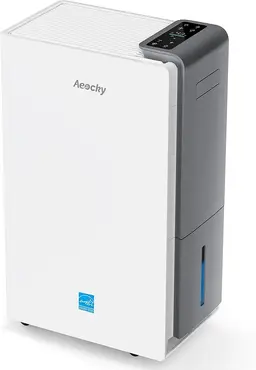
AEOCKY 80 Pint Smart Dehumidifier
- Energy Star Most Efficient 2025
- Smart humidistat holds your target
- 3-year warranty, 5 on the compressor
The efficiency and warranty leader, and the one that will cost you least to run. Most Efficient certification goes to a small fraction of the market, and the 3-year cover plus 5 years on the compressor sits far beyond the one-year industry norm.
- Capacity
- 80 pt max
- Coverage
- 4,500 sq ft
- Pump
- None

Availability changes through the day. Check the listing.
Learn more
AEOCKY's flagship pairs serious capacity with efficiency credentials most competitors cannot match: an Energy Star Most Efficient 2025 rating, a distinction reserved for a small fraction of the dehumidifiers on the market. That matters more here than in most categories, because a dehumidifier can run 8 to 12 hours a day in humid months and the difference lands directly on your electric bill. The 80-pint maximum rating covers up to 4,500 square feet, and the humidistat holds your target between 40 and 80 percent without babysitting. Build details stand out too, with copper tubing in the heat exchanger where cheaper units use aluminum, backed by a 3-year whole-unit warranty plus 5 years on the compressor. The gap: no built-in pump, so continuous draining depends on a drain sitting below the unit.
Pros
- Energy Star Most Efficient certification keeps running costs down
- Warranty coverage far exceeds the industry standard
- Copper heat-exchanger construction at a mid-range price
Cons
- No built-in pump, so continuous draining depends on gravity
- The 80-pint figure is a max rating, not the DOE standard
Best for: basements and whole-home use where efficiency and warranty matter most.
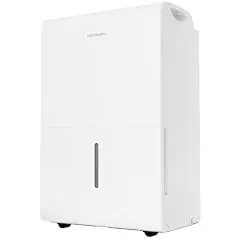
hOmeLabs WiFi 50 Pint Dehumidifier
- Most reviewed unit on this list
- Wi-Fi control from your phone
- Energy Star, 4,500 sq ft coverage
The most proven machine here, and the app is actually useful. Check humidity, change the target and get tank-full alerts without walking down to the basement, backed by the largest review base of any pick on this list.
- Capacity
- 50 pt/day
- Coverage
- 4,500 sq ft
- Control
- Wi-Fi app
Learn more
hOmeLabs has been one of the best-selling dehumidifier names on Amazon for years, and this Wi-Fi model carries by far the largest review base of any pick here, the kind of track record that surfaces long-term reliability problems if they exist. The app control is genuinely useful rather than a gimmick: check the current humidity, adjust the target and receive tank-full alerts without a trip downstairs, which is exactly the friction that makes people stop emptying a tank on time. Coverage is rated up to 4,500 square feet with Energy Star certification, and the design keeps the classic hOmeLabs formula: simple touch controls, a washable filter, and both tank and continuous-drain options. It lacks the pump and the extended warranty of the picks around it, which is what separates them.
Pros
- Largest review base of any dehumidifier on this list
- Wi-Fi app control with tank-full alerts
- Established brand with a long Amazon track record
Cons
- Standard warranty is shorter than the top pick's coverage
- No built-in pump for upward draining
Best for: buyers who want the most proven unit with remote app control.
Max 50 Pint Smart Dehumidifier
- Covers up to 3,000 sq ft
- Intelligent humidistat cycling
- Continuous drain hose included
Right-sized for the homes that fall between compact and whole-basement. The humidistat cycles the compressor to hold your level instead of running flat out, which keeps both the noise and the electricity bill down.
- Capacity
- 50 pt/day
- Coverage
- 3,000 sq ft
- Hose
- Included
Learn more
This 50-pint smart unit targets the middle of the market: mid-size homes, finished basements and large living areas up to 3,000 square feet, where an 80-pint machine would be overkill and a 30-pint one would never catch up. The intelligent humidistat samples the air and cycles the compressor to hold your chosen level rather than running flat-out until you switch it off, which keeps both noise and electricity use down during normal operation. A continuous drain hose ships in the box, so set-and-forget operation next to a floor drain requires no extra purchases, and the tank handles rooms where a drain is not available. Its review base is smaller than the two picks above, which is the honest reason it sits third rather than higher.
Pros
- Right-sized capacity for mid-size homes and finished basements
- Humidistat cycling saves energy versus constant running
- Drain hose included rather than sold separately
Cons
- Smaller review base than the two picks above
Best for: mid-size homes that sit between compact and whole-basement needs.
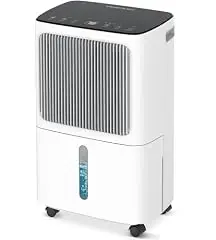
VEAGASO 30 Pint Dehumidifier
- Rooms and apartments to 2,500 sq ft
- Dedicated dry-clothes mode
- Continuous drain hose included
The apartment pick, with a laundry trick none of the others have. A dedicated dry-clothes setting runs the unit at maximum extraction, which genuinely speeds up indoor drying in homes without outdoor line space.
- Capacity
- 30 pt/day
- Coverage
- 2,500 sq ft
- Extra
- Dry clothes
Learn more
VEAGASO's 30-pint unit is the strongest pick here for apartments, bedrooms and single problem rooms rather than whole basements. Alongside the standard humidistat modes it includes a dedicated dry-clothes setting that runs at maximum extraction, genuinely useful for anyone drying laundry indoors during humid months. The included drain hose enables continuous operation next to a floor drain or sink, and the compact body moves between rooms far more easily than the 50-plus-pint machines above. It carries one of the larger review bases in this lineup, a meaningful signal for a less famous brand. The limitation is arithmetic, not quality: 30 pints cannot keep up with a genuinely wet full basement, no matter how well the unit works.
Pros
- Dry-clothes mode is genuinely useful for indoor laundry
- Compact enough to move between problem rooms
- Strong review base for a smaller brand
Cons
- 30-pint capacity is undersized for a wet full basement
Best for: apartments and single rooms, especially homes that dry laundry indoors.
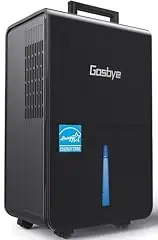
Gasbye Energy Star Dehumidifier
- Rated for up to 4,500 sq ft
- Auto-restart after power outages
- Continuous drainage hose included
The unattended-space specialist. After a power cut it resumes with the same settings instead of sitting idle until someone notices, which matters enormously for vacation homes, rentals and any basement you do not check daily.
- Coverage
- 4,500 sq ft
- Auto-restart
- Yes
- Energy Star
- Certified
Learn more
Gasbye's large-format unit competes directly with the AEOCKY at the top of this list on coverage, rating the same 4,500 square feet with Energy Star certification, typically at a friendlier price. The feature that earns it this position is auto-restart: after a power outage the unit resumes with the same settings rather than staying off, which is the difference between a protected empty house and a mold problem discovered on your return. It pairs a generously sized tank with an included hose for continuous gravity drainage, and the humidistat covers the standard target range. Its review base is more modest than the leaders, and like most units in this bracket there is no pump, but as an unattended workhorse for large damp spaces the case is strong.
Pros
- Auto-restart keeps protection running after outages
- Large-space coverage with Energy Star certification
- Generous tank plus included drain hose
Cons
- More modest review base than the category leaders
- No pump, so it still needs a drain below the unit
Best for: vacation homes and spaces that run unattended for days at a time.
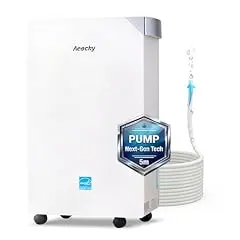
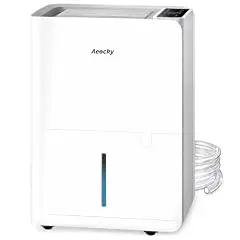
AEOCKY 4500 Sq.Ft Dehumidifier with Pump
- Built-in pump drains upward
- Smart humidistat holds the target
- Energy-efficient design
The one pick that solves drainage without a floor drain. The pump actively pushes water up to a utility sink, out a window or into a standpipe, which is the whole difference between set-and-forget and emptying a tank by hand.
- Coverage
- 4,500 sq ft
- Pump
- Built in
- Control
- Humidistat
Learn more
This is the pick that closes the one gap in the flagship AEOCKY at the top of this list: drainage in rooms without a floor drain. The built-in pump actively pushes collected water upward through the drain line, to a utility sink, out a basement window or into a standpipe, instead of relying on gravity. That is the single feature separating a truly set-and-forget basement unit from one that needs its tank emptied by hand every day. It keeps the same 4,500 square foot coverage class and smart humidistat as its sibling. As a newer listing its review base is still small, which is why it sits mid-list, but the ranking is almost beside the point here: if your drain sits higher than the unit, or does not exist, the pump is the entire purchase decision.
Pros
- Pump drains upward where gravity systems cannot
- Whole-basement coverage class with smart humidity control
- Solves the tank-emptying chore entirely
Cons
- Small review base so far as a newer listing
Best for: basements without a floor drain, where a pump is essential.
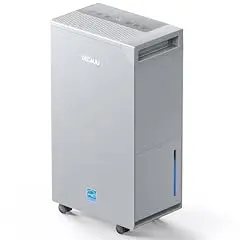
DECIUU Max 100 Pint Dehumidifier
- Highest rated capacity here
- Covers up to 5,000 sq ft
- Drain hose included
The raw-capacity leader, for spaces nothing smaller can handle. 100 pints across 5,000 square feet, aimed at flood-prone basements, crawl spaces after water events, workshops and large open floor plans in humid climates.
- Capacity
- 100 pt max
- Coverage
- 5,000 sq ft
- Hose
- Included
Learn more
The DECIUU Max is the raw-capacity leader of this lineup, rated at a maximum of 100 pints per day across up to 5,000 square feet, numbers aimed at genuinely difficult spaces. Read that figure the way you should read every max rating in this category: it reflects extreme heat-and-humidity test conditions rather than the federal standard, so expect meaningfully less in a typical cool basement. The same caveat applies to every competitor, so the relative advantage holds even if the absolute number does not. Intelligent humidity control and an included drain hose cover the practical basics for continuous unattended use. Its review base is still developing, which keeps it below the established picks, but nothing else here moves more water for the money.
Pros
- Largest rated capacity on this entire list
- Sized for genuinely difficult, very large spaces
- Continuous drain included for unattended running
Cons
- Review base is still developing for a flagship-size claim
- The 100-pint figure is a max rating, not a DOE rating
Best for: very large or severely damp spaces that smaller units cannot keep up with.
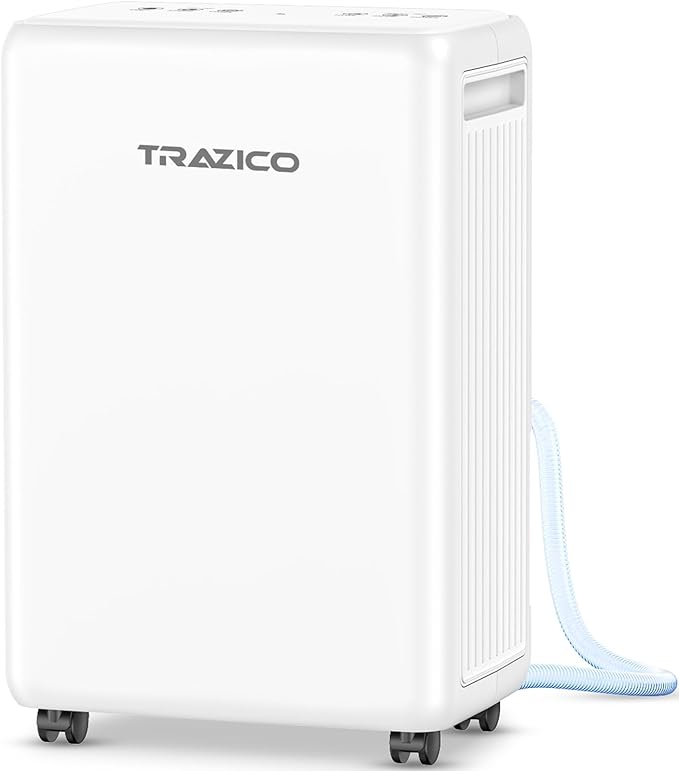
Trazico 2000 Sq.Ft Dehumidifier
- Auto-defrost for cold basements
- Intelligent humidity control
- Drain hose included
The cold-room specialist, and the feature matters more than the spec sheet suggests. Compressor units ice up below roughly 65°F and simply stop extracting; this one detects frost and clears it automatically.
- Coverage
- 2,000 sq ft
- Auto-defrost
- Yes
- Hose
- Included
Learn more
Trazico's 2,000 square foot unit earns its spot with a feature that matters more than its billing suggests: auto-defrost. Compressor dehumidifiers ice up when room temperatures drop, common in basements, garages and crawl spaces during cooler months, and a unit without defrost protection simply stops extracting until the coils thaw on their own. This model detects frost and cycles the compressor to clear it automatically, which keeps it productive in exactly the cool, damp spaces people most often buy dehumidifiers for. The included drain hose supports continuous operation, and the straightforward controls avoid menu complexity. Its 2,000 square foot rating positions it for single floors and mid-size basements rather than whole large homes.
Pros
- Auto-defrost keeps it extracting in cool basements and garages
- Simple controls with no menu complexity
- Continuous drain hose in the box
Cons
- Coverage suits single floors rather than large homes
Best for: cool basements and garages where cheaper units ice up and stall.
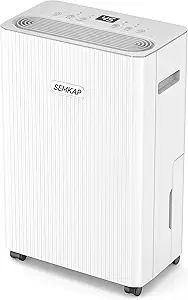
SEMKAP 2500 Sq.Ft Dehumidifier
- Quiet operation for living spaces
- Smart humidity control with cycling
- Continuous drainage included
Built around livability rather than raw extraction. A noise profile designed for bedrooms and living areas, where the constant compressor drone of a basement-class machine would be intolerable.
- Coverage
- 2,500 sq ft
- Design
- Quiet first
- Hose
- Included
Learn more
SEMKAP positions this 2,500 square foot unit around livability: an operating noise profile designed for bedrooms and living areas, where the constant compressor drone of a basement-class machine would drive you out of the room. The smart humidity control cycles the unit off once the target is reached rather than running continuously, which further reduces the time it spends making any noise at all, an underrated way to solve a noise problem. An included hose covers continuous drainage for anyone parking it near a drain, while the tank handles bedroom duty. It is one of the newest listings here with a small review base, so its long-term durability record is still being written, but it fills a slot none of the big basement units above can.
Pros
- Quiet-first design for bedrooms and living areas
- Smart cycling minimizes total running noise
- Hose included for continuous drainage
Cons
- Very small review base so far as a new listing
- No published decibel figure, unlike the Banabie below
Best for: bedrooms and living spaces where noise is the deciding factor.
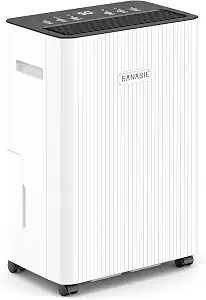
Banabie 32 Pint Dehumidifier
- 32 dB, the lowest rating here
- 24-hour timer
- Energy-efficient for long runs
The quietest spec sheet in the lineup, by a clear margin. 32 decibels is whisper territory rather than appliance territory, which is the one claim no basement-class machine on this list can honestly make.
- Noise
- 32 dB
- Capacity
- 32 pt/day
- Timer
- 24 hour
Learn more
Rounding out the list, Banabie's 32-pint unit stakes its claim on a single number: a 32-decibel noise rating, quieter than any other pick here and in the territory of a whisper rather than an appliance. If that figure holds up in your room, it is quiet enough to run beside a bed all night, something none of the basement-class machines above can honestly claim. A 24-hour timer schedules runs around sleep or work hours, the smart humidity control handles targets automatically, and the 2,500 square foot rating covers bedrooms, offices and apartments comfortably. It is the newest listing here with the smallest review base, so treat the headline spec with the same early-days caution as any unproven model.
Pros
- Lowest rated noise level of any pick on this list
- 24-hour timer schedules quiet hours automatically
- Sized sensibly for bedrooms and apartments
Cons
- Smallest review base on this list, so specs are early-days
- 32 pints will not keep up with a damp full basement
Best for: light sleepers who need a dehumidifier running in the bedroom overnight.
Side-by-side comparisonFilter by space and feature, then compare on one screen.
| Model | Capacity | Coverage | Standout feature | Score | Review |
|---|---|---|---|---|---|
| 1. AEOCKY 80 Pint SmartBest overall | 80 pt max | 4,500 sq ft | Most Efficient cert, 3-yr warranty | 9.8 | Open |
| 2. hOmeLabs WiFi 50 PintMost proven | 50 pt/day | 4,500 sq ft | Most reviewed, Wi-Fi app control | 9.5 | Open |
| 3. Max 50 Pint SmartRight-sized | 50 pt/day | 3,000 sq ft | Humidistat cycling, hose included | 9.2 | Open |
| 4. VEAGASO 30 Pint | 30 pt/day | 2,500 sq ft | Dedicated dry-clothes mode | 8.9 | Open |
| 5. Gasbye Energy Star | Large | 4,500 sq ft | Auto-restart after outages | 8.6 | Open |
| 6. AEOCKY with PumpHas pump | High | 4,500 sq ft | Built-in pump drains upward | 8.3 | Open |
| 7. DECIUU Max 100 PintBiggest | 100 pt max | 5,000 sq ft | Largest capacity on this list | 8.0 | Open |
| 8. Trazico 2000 Sq.Ft | Mid | 2,000 sq ft | Auto-defrost for cool rooms | 7.7 | Open |
| 9. SEMKAP 2500 Sq.Ft | Mid | 2,500 sq ft | Quiet-first living-space design | 7.4 | Open |
| 10. Banabie 32 PintQuietest | 32 pt/day | 2,500 sq ft | Quietest rating here: 32 dB | 7.1 | Open |
Swipe the table sideways →
Which dehumidifier actually fits youTwo questions decide almost everything: how big and damp is the space, and where will the water go?
Find your dehumidifier
No sign-up. The recommendation updates instantly.
A basement with gravity drainage and efficiency in mind: Most Efficient certification keeps the bill down over long daily runs, and the warranty runs years beyond the industry standard.
Open the AEOCKY 80 Pint Smart DehumidifierGuidance based on the 10 units in this ranking. Size by how damp the space actually is, not by square footage alone.
Sizing, drainage and noiseCoverage, how the water leaves, and the standout feature per unit, ordered by the space each one is built for.
| Model | Coverage | Drainage | Cold rooms | Best suited to |
|---|---|---|---|---|
| DECIUU Max 100 Pint | 5,000 sq ft | Hose, gravity | Not stated | Severe moisture, very large spaces |
| AEOCKY 80 Pint Smart | 4,500 sq ft | Hose or 1.45 gal tank | Not stated | Whole basement, lowest running cost |
| hOmeLabs WiFi 50 Pint | 4,500 sq ft | Hose or tank | Not stated | Whole basement, remote monitoring |
| Gasbye Energy Star | 4,500 sq ft | Hose, large tank | Not stated | Unattended homes, auto-restart |
| AEOCKY with Pump | 4,500 sq ft | Built-in pump, upward | Not stated | Basements with no floor drain |
| Max 50 Pint Smart | 3,000 sq ft | Hose or tank | Not stated | Mid-size homes, finished basements |
| VEAGASO 30 Pint | 2,500 sq ft | Hose or tank | Not stated | Apartments, indoor laundry drying |
| SEMKAP 2500 Sq.Ft | 2,500 sq ft | Hose or tank | Not stated | Bedrooms and living areas |
| Banabie 32 Pint | 2,500 sq ft | Tank, timer | Not stated | Bedrooms overnight, 32 dB |
| Trazico 2000 Sq.Ft | 2,000 sq ft | Hose or tank | Auto-defrost | Cool garages and unheated basements |
Swipe the table sideways →
Before you check out
Size by moisture level, not square footage alone: a moderately damp 1,500 sq ft basement needs more capacity than a slightly humid 3,000 sq ft main floor. Then plan the drainage before the box arrives, because it is the detail that decides whether the unit runs itself or becomes a daily chore. A drain below the outlet works with any model on this list; no drain nearby means either emptying a tank every day or buying the pump model. And when you are between two sizes, size up: an oversized unit simply cycles off early, while an undersized one runs constantly and still falls behind.
Set it up so it actually worksFour steps that separate a unit that fixes the problem from one that runs all day for nothing.
- Let it stand upright for a few hours before switching onCompressor units ship and are often stored on their side, which lets refrigerant oil migrate out of the compressor. Standing it upright before the first run lets the oil settle back, and skipping this is a known way to damage a new unit permanently.
- Close the room before you judge the resultsA dehumidifier fighting an open window or door is dehumidifying your whole neighborhood. Close everything in the target space, then give it 24 hours before deciding whether the capacity is right, since the first day includes drying out furniture and walls, not just air.
- Give the intake and exhaust real clearanceLeave a foot or more from walls and furniture on all vented sides, and position it centrally in the dampest part of the room rather than tucked into a corner. Restricted airflow is the most common reason a correctly sized unit underperforms.
- Set the target between 30 and 50 percent, then leave itAround 45 percent discourages mold and dust mites without over-drying. Set the humidistat and let it cycle rather than switching the unit on and off manually, which is both less effective and harder on the compressor.
Signs something is off
Frost on the coils in a cool room means the unit lacks auto-defrost or the room is simply too cold for a compressor model; below roughly 65°F you need a defrost-equipped unit. Water pooling around the base usually means a hose kink or a drain plug left in when switching to continuous mode. A unit running constantly without reaching target is either undersized for how damp the space really is, or fighting an air leak from outside. And a musty smell that persists after humidity drops usually points to mold already established on a surface, which drying alone will not remove.
Which one to choose for each situation
- The best efficiency and warranty for a basementAEOCKY 80 Pint Smart Dehumidifier, with Most Efficient certification and 3-year coverage. Open the review
- The most proven unit, with app controlhOmeLabs WiFi 50 Pint, the most reviewed pick here. Open the review
- A mid-size home or finished basementMax 50 Pint Smart Dehumidifier, right-sized at 3,000 sq ft. Open the review
- Drying laundry indoors, or an apartmentVEAGASO 30 Pint, with its dedicated dry-clothes mode. Open the review
- A vacation home or rental left unattendedGasbye Energy Star Dehumidifier, with auto-restart after outages. Open the review
- A basement with no floor drainAEOCKY with Pump, which pushes water up to a sink or window. Open the review
- Severe moisture in a very large spaceDECIUU Max 100 Pint, the biggest capacity here. Open the review
- A cool garage or unheated basementTrazico 2000 Sq.Ft, built around auto-defrost. Open the review
- Quiet operation in living spacesSEMKAP 2500 Sq.Ft, designed quiet-first. Open the review
- Sleeping next to it every nightBanabie 32 Pint, with the lowest noise rating on this list. Open the review
Whole basement, living space or cold room: which class is yours
Every unit here pulls moisture from air the same way, by running it over a cold coil so water condenses out. What separates them is the environment each is engineered for, and buying across those lines is how people end up disappointed.
- Whole basement, 4,500 sq ft and up (ranks 1, 2, 5, 6 and 7). High capacity, continuous drainage as the default, and a compressor loud enough that nobody wants one in a bedroom. This is where efficiency certification and warranty length pay for themselves, because these units run the most hours.
- Living spaces, 2,500 to 3,000 sq ft (ranks 3, 4, 9 and 10). Moderate capacity with noise as a first-class design constraint. Enough to fix a damp apartment or a single problem room, and quiet enough that you can be in the room while it works.
- Cold rooms below 65°F (rank 8). A category defined by one feature rather than size. Standard compressors ice up in cool garages, crawl spaces and unheated basements and simply stop extracting, so auto-defrost is not a bonus here, it is the requirement.
Pint ratings and drainage: the two numbers that decide everything
Two things determine whether a dehumidifier solves your problem, and the first one is deliberately confusing. The pint rating comes in two flavors: the U.S. Department of Energy standard measures extraction at 65°F and 60 percent humidity, roughly a cool basement, while many brands advertise a "max" figure measured at 95°F and 90 percent, a sauna-like extreme. The same physical machine can honestly be sold as a 50-pint unit under DOE and an 80-plus-pint unit under max conditions. Neither number lies, but they are not comparable, so check which one you are reading before assuming one model is stronger than another.
Drainage is the second, and it is the one that decides whether you actually keep using the thing. Gravity draining through a hose costs nothing but only works downhill, so it needs a floor drain below the unit's outlet. A built-in pump pushes water upward to a sink, a window or a standpipe, and in a basement without a drain that is the difference between an appliance that runs itself and a bucket you empty twice a day. Decide this before you shop, because it eliminates most of the list immediately.
- 30 to 32 pints. A moderately humid apartment, a bedroom, a single problem room. Quiet enough to live with, undersized for a wet basement.
- 50 pints. The range that covers most homes and finished basements. Where capacity and livability meet for the majority of buyers.
- 80 to 100 pints. Large or genuinely wet basements, crawl spaces after water events, workshops. Loud, thirsty, and the only thing that works when the space is truly damp.
Frequently asked questions
What size dehumidifier do I actually need?
Match capacity to both the area and how damp it actually is: a 30-pint unit covers a moderately humid apartment or large bedroom, 50 pints suits most homes and finished basements, and 80-plus-pint units are for large or genuinely wet basements. When in doubt, size up, since an oversized unit simply cycles off early while an undersized one runs constantly and still falls behind.
Why does my dehumidifier collect less water than the rating promised?
Most advertised capacities are measured in extreme conditions of 95°F and 90 percent humidity, while the federal test standard uses 65°F and 60 percent, so real-world extraction in a typical basement lands well below the box number. This affects every brand, which is why comparing like-for-like ratings matters more than the raw figure.
What humidity level should I set?
Most guidance recommends keeping indoor relative humidity between 30 and 50 percent, with around 45 percent being a comfortable target that discourages mold and dust mites without over-drying the air. Basements prone to musty smells often benefit from the lower end of that range.
What is the difference between gravity draining and a pump?
Gravity draining runs water through a hose to a drain located below the unit's outlet, which costs nothing but only works downhill. A built-in pump actively pushes water upward, to a sink, a window or a standpipe, which is essential in basements without a floor drain.
Why does my dehumidifier ice up, and what is auto-defrost?
When room temperature drops below roughly 65°F, moisture can freeze onto the cold coils instead of dripping into the tank, and the unit stops extracting. Auto-defrost detects the frost and cycles the compressor off while the fan thaws the coils, letting the unit keep working in cool basements and garages.
How much electricity does a dehumidifier use?
A mid-size compressor unit typically draws a few hundred watts while running, and total cost depends on how many hours a day it operates, which is why Energy Star models matter for daily use. Efficient units also cycle off once the target humidity is reached instead of running continuously.
Where should I place the dehumidifier in a room?
Leave clearance around the air intake and exhaust, ideally a foot or more from walls and furniture, and position it centrally in the dampest area rather than in a corner. Closing windows and doors while it runs helps it lower humidity rather than fighting a constant supply of moist outside air.
How we evaluated these dehumidifiers
Our evaluation is editorial. We compare the most searched models on Amazon by cross-referencing manufacturer specifications with the reviews of people who already bought them.
- Moisture removal capacity, the rated pints per day, and whether that number comes from the federal DOE test standard or from best-case extreme conditions.
- Coverage area, the realistic square footage the unit can manage, not just the headline number on the box.
- Drainage options, tank size, continuous gravity drain hose, and whether a built-in pump can push water upward to a sink or window.
- Energy efficiency, Energy Star certification and running costs, which matter enormously for an appliance that runs many hours a day.
- Noise level, how disruptive the compressor and fan are in bedrooms, living areas and shared spaces.
- Smart features and controls, humidistats, Wi-Fi control, timers, auto-restart after power outages and auto-defrost for cold rooms.
- Cost-to-value ratio, whether the asking price lines up with the capacity, features and build quality delivered.
No brand pays for placement. Our links are affiliate links: if you buy through them we earn a small commission at no extra cost to you. Learn how we select products.
Conclusion
The right dehumidifier in 2026 starts with two questions: how big and how damp is the space, and where will the water go? For whole basements, the AEOCKY 80 Pint Smart Dehumidifier leads on efficiency and warranty, the hOmeLabs WiFi 50 Pint brings the longest track record plus app control, and the AEOCKY with Pump is the answer wherever gravity draining is impossible. The DECIUU Max 100 Pint covers the most severe, largest spaces, while the Gasbye Energy Star Dehumidifier earns its keep in vacation homes with auto-restart.
For living spaces the picture inverts and noise becomes the deciding factor: the Max 50 Pint Smart Dehumidifier right-sizes mid-size homes, the VEAGASO 30 Pint adds a genuinely useful dry-clothes mode for apartments, and the SEMKAP 2500 Sq.Ft and Banabie 32 Pint both put quiet operation first for bedrooms. The Trazico 2000 Sq.Ft fills the remaining gap with auto-defrost for cool garages and unheated basements where standard compressors ice up.
Remember that capacity ratings are measured under different conditions across brands, so compare like for like, plan your drainage before the box arrives, and pick the unit on this list that matches your space, your moisture level and your tolerance for noise.